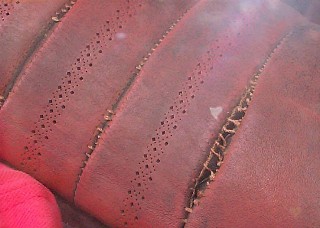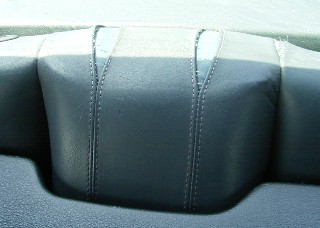
Treating hardened and shrunken classic car leather
 Download PDF
Leather that has not been cared for for decades becomes hard and shrinks, especially in vehicles. This article explains what is still possible, what is not, and how to proceed.
Why does leather become hard?
There are two causes of hardened leather, and they require different responses.
Drying out through lack of care: Without movement and regular replenishment, leather becomes stiffer and firmer over time. The fatty substances in the leather diminish and the fibre structure hardens. This condition is largely reversible with our Old Leather Softener.
Shrinkage caused by heat (“gluing”): Leather experts refer to heat-related shrinkage as “gluing”. Vegetable-tanned leather, as frequently fitted in older vehicles, shrinks at around 70°C. Chrome-tanned leather is heat-resistant between 90 and 100°C, but can also deform. Black leather also heats up more strongly than light-coloured leather.
Once leather has shrunk, this is irreversible. An area made smaller by heat cannot be stretched out again. No product can reverse this.
IMPORTANT: Observe the order
Repairs to tears and splits with Fluid Leather (liquid leather) must be carried out before treatment with Softener. After Softener treatment, there are too many fats in the leather, so repair areas no longer adhere reliably and can open again.
Procedure for hardened leather
Step 1: Cleaning
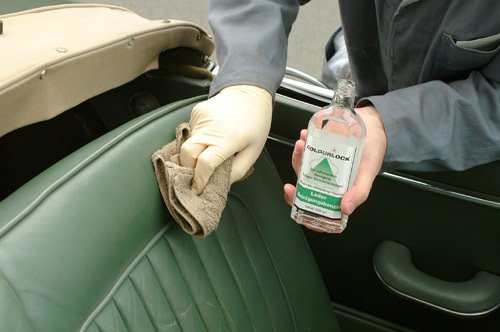
Clean the leather with Colourlock Leather Cleaner mild and as little moisture as possible.
Important: antique leather and very old vegetable-tanned leather can be destroyed by moisture. Always clean only with foam; never wipe wet.
Step 2: Apply Old Leather Softener
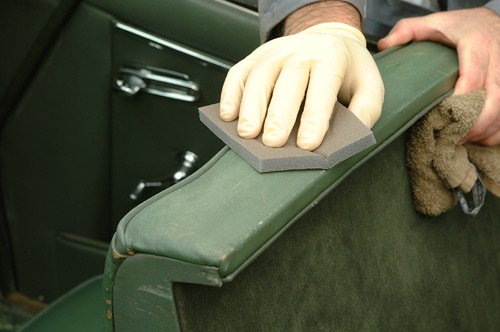
After it has dried completely, moisten the leather as thoroughly as possible with Colourlock Old Leather Softener. For leather with a very smooth, closed surface, lightly sand it beforehand with the Colourlock Sanding Pad; this considerably improves absorption of the Softener.
Treatment from the reverse side of the leather is most effective. The covers do not need to be removed specifically for this; however, if they have already been removed as part of upholstery work, spray the Softener on from the reverse side, for example with a plant mister.
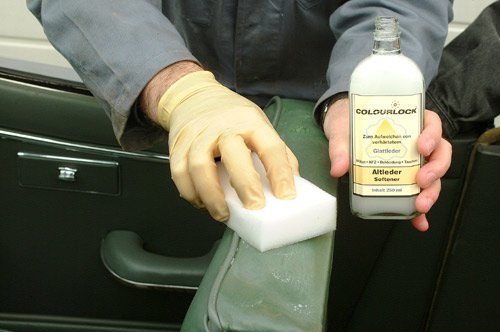
Allow the Softener to soak in and then moisten the leather repeatedly. Carry out three to four rounds, with at least 24 hours between treatments. Move the leather as much as possible during this time. A sturdy glass bottle can be used for DIY application.
Do not oversaturate the leather: too much Softener makes it oily and greasy. Remove old mould before treatment.
Step 3: Assess the result
Very old leather or leather shrunk by the sun’s heat becomes softer only to a limited extent. Softener is not a miracle product, but significant improvement can generally be achieved. The leather will never again be as supple as it once was, but it will become more stable and manageable.
As soon as no further progress is achieved or the result is satisfactory, wipe off the remaining Softener with a cloth and let the leather rest for a few days.
Step 4: Degreasing and colour refreshing
Before any further treatment, for example with colour or care products, the surface must be degreased with Leather Cleaning Spirit; otherwise, the Softener prevents adhesion.
Then retint colour damage and lightened areas with Colourlock Leather Fresh in a suitable colour.
Finding the right colour:
We mix special colours based on the manufacturer’s colour name or a submitted sample for a surcharge of CHF 25.-. Ask an authorised dealer of your brand for the exact colour name (not the code) using the chassis number, or send us a sample (headrest, sun visor, cover or another part) by post. Of course, you will receive the part back. With older vehicles, it is often possible to cut off a piece of leather from a concealed area (under the seat, behind a trim panel).
You will find our address below
(Please write the sender clearly):
Weidmann & Sohn
Lederzentrum Schweiz
Tämperlistrasse 3
8117 Fällanden
IMPORTANT: When ordering through the shop, select the “send a sample” option in the colour selection for Leather Fresh and Fluid Leather. We will contact you immediately after receiving the sample.
Please note that special-colour mixes, whether based on a manufacturer colour or a submitted sample, take 7–9 working days from the order date to process before they are dispatched.
You can find the colour chart with all standard colours here.
You can find the manufacturer list here.
Step 5: Care and protection
Finally, apply Colourlock Leather Care. Its antioxidants stop further deterioration of the leather. Then apply Colourlock Elephant Leather Preserver; it preserves the surface, restores a slight sheen to old leather and protects it in the long term.
When is reupholstery the better choice?
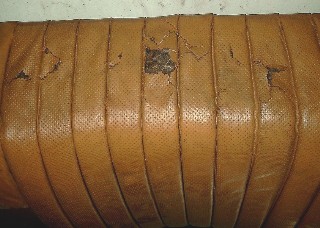
When the leather tears, no product will help any more. For dashboards that would require complex removal, or when the result is not satisfactory after several treatments, reupholstery is probably the cleaner solution. We will be happy to advise you.
Product recommendations
Note:
(Products are added to the basket by clicking them and can then be ordered)
Note on colour selection: After selecting the products you want, click “Add to Basket”. You will then be redirected to the colour selection.
Treating hardened classic-car leather
- Leather Cleaner mild 250 ml
- Old Leather Softener 250 ml
- Sanding Pad
- Leather Cleaning Spirit 225 ml
- Leather Care 100 ml
- Leather Fresh 100 ml
For older leather, it makes sense to send us a sample. Since the leather has aged in colour, a sample mix by us is appropriate. The colour can then be mixed to match the leather precisely. Simply select “I would like to send a sample” in the colour-selection menu and follow the guide.
Please select a colour:
Choose colours
Please configure every selected colour product before adding the selection to the cart.
“I also need Fluid Leather” – please select a colour:
Choose colours
Please configure every selected colour product before adding the selection to the cart.